Human in the loop (HITL) means a person takes part in an automated process: they review, approve or correct what the system does before it has an effect. In AI coding, the loop is prompt, generate, ship. The human is the step that reads the diff before it reaches production.
Our shirt draws that loop as a circle with three nodes, prompt, generate and ship, and one green node with a person in it. It is for the developer who is still that node.
Three levels of human control
| Term | What the human does | Example |
|---|---|---|
| Human in the loop | Approves each action before it happens | An agent asks before it runs a shell command |
| Human on the loop | Watches and can stop the system | You let the agent work and review the result |
| Human out of the loop | Nothing during the run | An agent with all permission checks turned off |
Coding agents let you move between these levels. Permission prompts keep you in the loop. Auto-approve modes put you on it. And –dangerously-skip-permissions takes you out.
It is also the law, for high-risk AI
In the EU, human oversight is a legal requirement for high-risk AI systems. Article 14 of the AI Act says these systems “shall be designed and developed in such a way that they can be effectively overseen by natural persons during the period in which they are in use.”
The article lists what the people overseeing the system must be able to do. Among them:
- “remain aware of the possible tendency of automatically relying or over-relying on the output produced by a high-risk AI system (automation bias)”
- “decide, in any particular situation, not to use the high-risk AI system or to otherwise disregard, override or reverse the output”
- “intervene in the operation of the high-risk AI system or interrupt the system through a ‘stop’ button or a similar procedure”
A code assistant is usually not a high-risk system under the Act. But the ideas carry over: the human must understand the output, be able to say no, and be able to stop the run.
The rubber-stamp problem
The weak point of human in the loop is the human. After the fiftieth correct suggestion, you stop reading and start clicking Approve. The Act names this risk directly: automation bias. A loop with a human who approves everything is a loop without a human, plus a delay.
Ways to keep the human useful:
- Ask for approval only where it matters: deletes, deploys, payments, emails. Too many prompts train people to click without reading.
- Keep changes small, so a review takes minutes, not an afternoon.
- Let tests and linters check the boring parts, so the human checks the logic.
- Watch for the assistant agreeing with everything you say: see the “You’re absolutely right!” meme.
Get the shirt
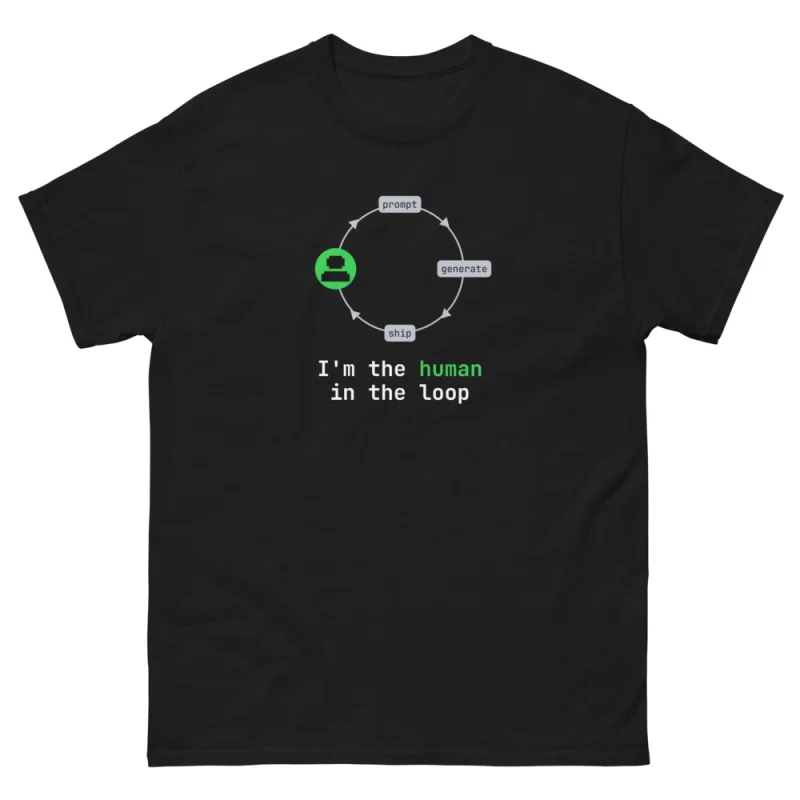
Human in the Loop T-Shirt · 24 €
Prompt, generate, you, ship.

You're Absolutely Right T-Shirt · 24 €
What the loop sounds like without you.
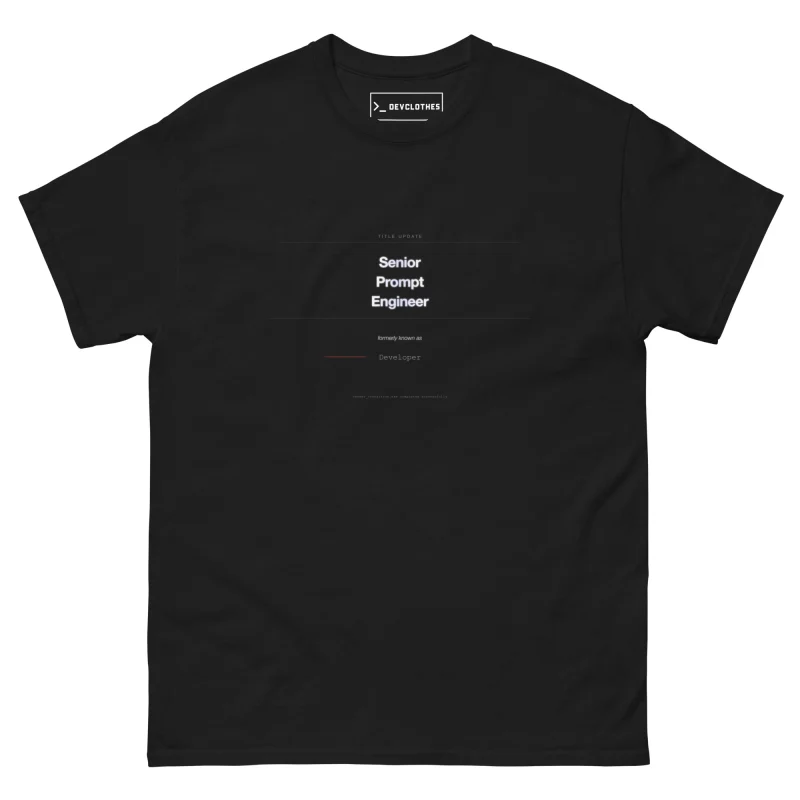
Senior Prompt Engineer T-Shirt · 24 €
The human at the start of the loop.
All shirts are unisex, S to 5XL, printed on demand in black, graphite heather and white. Check the size guide before ordering. More ideas in the Christmas gift guide for programmers.
FAQ
What does human in the loop mean?
A person is part of an automated process and reviews or approves its actions before they take effect.
What is the difference between human in the loop and human on the loop?
In the loop, the human approves each action. On the loop, the system acts on its own and the human monitors it and can step in.
Does the EU AI Act require human in the loop?
Article 14 requires effective human oversight for high-risk AI systems. The exact measures depend on the risk and the level of autonomy of the system.